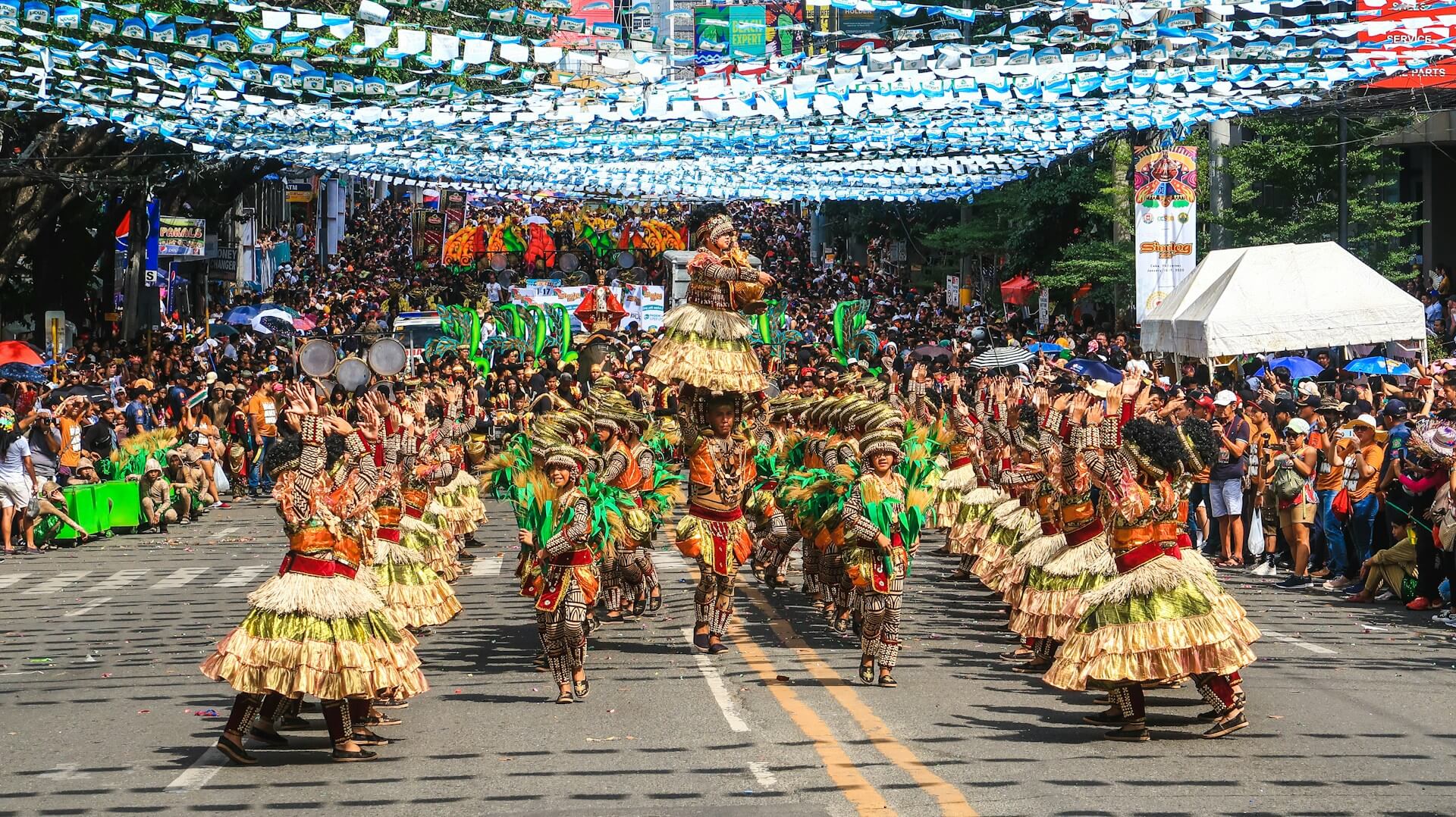
Imagine millions of people crammed into the historic streets of Cebu, a non-stop drumbeat echoing against centuries-old Spanish colonial walls, and a sea of brightly colored costumes moving to the exact same hypnotic rhythm.
If your idea of a vacation is lying quietly on a white-sand beach sipping a coconut, Sinulog will completely shatter that vibe. And honestly? You'll love every second of it.
Every January, the Philippines hosts some of the most electric street parties on the planet, but the Sinulog Festival in Cebu takes the crown for sheer energy. It is widely considered the mother of all local street parties. If you want to experience authentic Filipino festival culture at maximum volume, this is the exact spot you need to be.
Grab your comfiest sneakers, pack some earplugs, and let's talk about the real cultural meaning behind the chaos.
More Than Just a Party: The Story of Baby Jesus
To an outsider standing in the middle of a crowded street in Cebu City, Sinulog looks like a massive, multi-day rave fueled by street food and San Miguel beer. And well, it kind of is. But underneath the neon body paint and thumping bass lies a centuries-old spiritual tradition.
The word Sinulog comes from the Cebuano word sulog, which translates to "like water current movement." If you watch the dancers closely, you'll notice a very specific two-step forward, one-step backward shuffle. That footwork is designed to mimic the current of the Cebu River.
Long before Spanish colonisers arrived in 1521, indigenous locals were already dancing this way. When Ferdinand Magellan gifted a small wooden image of the Child Jesus (the Santo Niño) to the local chieftain's wife, Queen Juana, it kicked off a massive cultural mashup. That tiny statue survived fires, wars, and centuries of history. Today, the festival is a massive, week-long birthday bash for the Santo Niño, blending ancient indigenous rituals with deep-rooted Catholic devotion.
The Beat That Controls the Whole City
If you've never experienced the raw power of a live drumline, be prepared.
For days leading up to the grand parade, the streets vibrate. Literally. You can feel the bass of the drums in your chest from blocks away. The rhythm is always the same—pit, sen, Señor!—chanted over and over by millions of people.
Pit comes from sangpit, a local word meaning to call or invoke.
Sen and Señor are short for Señor Santo Niño.
You'll hear strangers shouting it across crowded intersections, vendors yelling it from street food carts, and dancers chanting it mid-choreography. It creates this wild, instant sense of community. You could be standing next to someone from completely opposite sides of the world, but the moment you catch the beat, you're part of the same tribe.
The Grand Parade: A Visual Overload
The main event on Sunday is an absolute marathon. We are talking about a parade that runs for hours under the tropical sun, featuring dozens of contingent groups from all over the country who spend an entire year practising their routines.
The costumes are insane. Think giant feather headdresses, intricate beadwork, hand-painted armour, and fabrics in every neon shade imaginable. Each group tells a story through dance—some reenact historical events like the arrival of the Spaniards, while others showcase modern interpretations of local myths and provincial folklore.
For any Philippines Festival junkie, this is the holy grail. The scale, the colours, and the sheer stamina of the dancers will blow your mind.
Quick Tips for Surviving the Crowd:
1. Hydrate or Diedrate: The Cebu sun in January is no joke. Keep a water bottle glued to your hand.
2. Wear Clothes You Don't Mind Ruining: By mid-day, someone is guaranteed to wipe colored chalk or paint on your face or shirt. Lean into it.
3. Leave the Valuables at the Hotel: Pickpocketing happens in massive crowds. Keep your phone secure and your cash in a front pocket.
Street Parties and Local Hospitality
Once the official daytime parade wraps up, the vibe shifts gears. The main avenues shut down to vehicle traffic entirely, turning into a massive, open-air pedestrian zone.
Sound systems spill out onto the pavement from every single restaurant, convenience store, and residential porch. People set up makeshift tables right on the sidewalk, grilling pork skewers (isaw and barbecue), cracking open cold drinks, and inviting complete strangers to pull up a plastic chair.
This is where you see the true heart of a Pinoy celebration. Nobody is a stranger here. If you make eye contact with a group laughing over a bucket of beer, expect a warm wave, a loud cheer, and an immediate offer to join the table.
Why Gen Z and Millennial Travellers Need This on Their Bucket List
Let's be real: modern travel can sometimes feel a bit curated for Instagram. You visit a café, take a photo of a matcha latte, check a box, and move on.
Sinulog is the exact opposite of that. It's loud, messy, overwhelming, deeply cultural, and totally unfiltered. It forces you to put your phone down, lose your voice from shouting, and immerse yourself in an ocean of human energy.
It's an incredible reminder that travel isn't just about seeing pretty landscapes—it's about feeling the pulse of a culture that knows how to celebrate life through every high and low.